
By Arthur Moses Opio
One of the biggest challenges internet users continue to face today is email fraud. With Artificial Intelligence(AI) now becoming a key tool to weaponise, hackers are surely getting free passes to their opponent's goals. AI improves grammatical errors we used to point out and a clean email can be sent with very good grammar.
Email remains the number attack surface used by hackers this is because despite the advent of social media platforms like WhatsApp often official and trusted communication is done through email.
For a student or staff to subscribe to a journal. They will be asked for an email address from their institution. Why an institution? Institutions are legitimate and they come with authenticity and credibility not bots or robots.
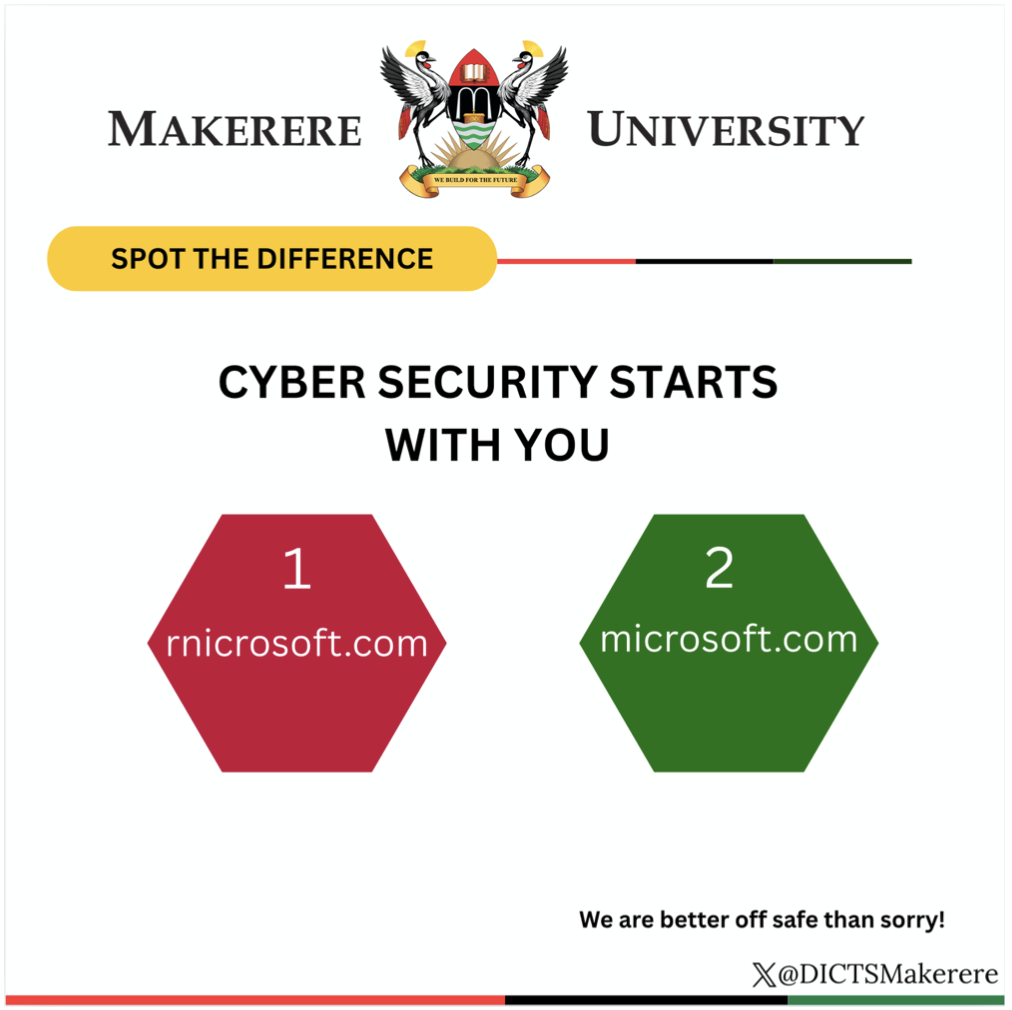
In a recent webinar with the School of Public Health, DICTS participated in sharing key aspects like how to identify fraudulent and impersonation emails. This link gives a blue print into the kinds of emails hackers send.
If you did not have anything to do with shipping and receive an invoice, that should already ring a bell in your mind that this is a red flag. You could be a finance staff and an email like this with an attachment to download or link to click comes through to you. Just before you do. It's important to pause, stop and think. This delay in clicking while you review or ask the IT personnel if the email is legitimate or not can save your personal and work data from being encrypted or wiped out.
We implore staff to be vigilant because it's through great cyber hygiene practices that we can reduce or mitigate email fraud.
Click this link for the presentation.